

Soaking up the sun and converting its rays into electricity through rooftop solar has become a significant part of the energy mix in Australia.
In Western Australia’s capital city of Perth, we can expect more than eight hours of sunshine per day on average and a massive 36% of households have solar PV systems on their roof.
House batteries have not benefitted from government incentives in the same way as rooftop solar has in this country but, based on our experience, there is great potential for house batteries to decrease our greenhouse gas emissions – particularly in WA where the grid remains overly dependent on fossil fuels.
House batteries will be one of many solutions to cleaning up electricity supply. Here are some key lessons we’ve learned since plugging in our house battery in May 2022:
1. Our electricity emissions have gone down 31%
Most importantly, the amount of electricity we have bought from the grid decreased from an average of 19.65KWh per day to 12.23KWh per day in the first 12 months of having the battery connected – a 37.7% decrease. In WA, where less than 17% of electricity came from renewable sources in 2022 – that means we have used 31% less electricity generated from fossil fuels!
2. We know which appliances use most energy
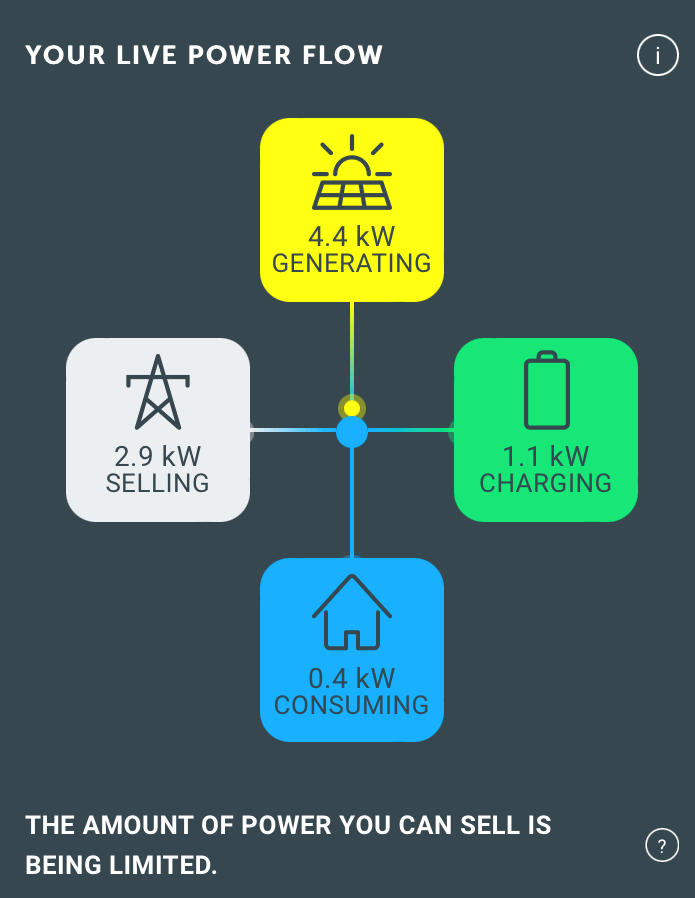
The app that came with the battery helps us monitor our electricity use, showing how much electricity we are generating, storing, using and exporting to the grid at any given time. The app is part of the solar and battery package we signed up to and is something I check almost daily, sometimes several times a day (sad, I know).
We can see that our pool pump and air conditioning are two of the hungriest electrical appliances we own so we can be more diligent about when we use them.
3. Time of day affects our electricity use
Depending on the time of year, our battery is usually fully charged by lunchtime. As well as powering our home, the battery usually feeds back into the grid during the evening and is drained by the time we get up the next morning.
Using the dishwasher or pool pump before the sun comes up, when the battery is drained is not ideal. We try to avoid putting the dishwasher on early in the morning (the best time is between late morning and early evening, when the battery has plenty of charge). We’ve also set our pool pump to come on at 10am, when the sun is getting to its peak power and the battery is nearing full charge, to avoid drawing electricity from the grid.
Using the washing machine during the day, rather than at night helps reduce our use of dirty grid electricity too.
4. We can get by during a power cut
We’ve had a number of blackouts since installing our house battery, but our power has stayed on! It’s not uncommon to lose power where we live – often when storms bring trees down on powerlines (usually in winter) or when bush fires cut the electricity supply (usually in summer).
Depending on when a power outage occurs (and how much charge the battery has), we can keep using electricity around the clock. We had one power cut during the winter when the battery had discharged most of its load, meaning that we only had an hour or so of electricity but it was late in the evening and we hardly use any electricity during the night.
See how we got by in a four-day power cut.
5. We can help keep the lights on for others
As members of Plico Energy, we are part of a Virtual Power Plant (VPP) that is activated to stabilise the grid at times of peak and minimum demand. On the handful of occasions when the VPP has been activated, Plico takes control of all its customers’ batteries when there is a need to support the grid.
A peak demand event usually occurs on the hottest days of summer, with high electricity from people returning home from work and powering up their air conditioning and other appliances. In these circumstances Plico’s customers are asked to reduce their energy consumption and all batteries feed into the grid to support use by other households across the Perth metro area.
A minimum demand event occurs when there is excess electricity in the grid – our battery stops exporting to the grid and the energy we import helps stabilise the grid.
In a peak demand event, the VPP is usually activated for around two hours in the evening and has been estimated to help keep 1,500+ homes from experiencing a blackout. There is more information on the VPP on Plico’s website if you’re interested.
6. Don’t take your eyes off the dial!
This is true whether you have a house battery or not: if you’re not careful about the electricity you use then you can run up a big bill. Last winter we got heaters for our kids’ bedrooms but forgot to use the timer function. I hadn’t checked the battery app on my phone for a while and when I did, I realised our electricity use had gone through the roof. Next winer we will be using the timer on those power-hungry heaters!
7. There’s potential to store more
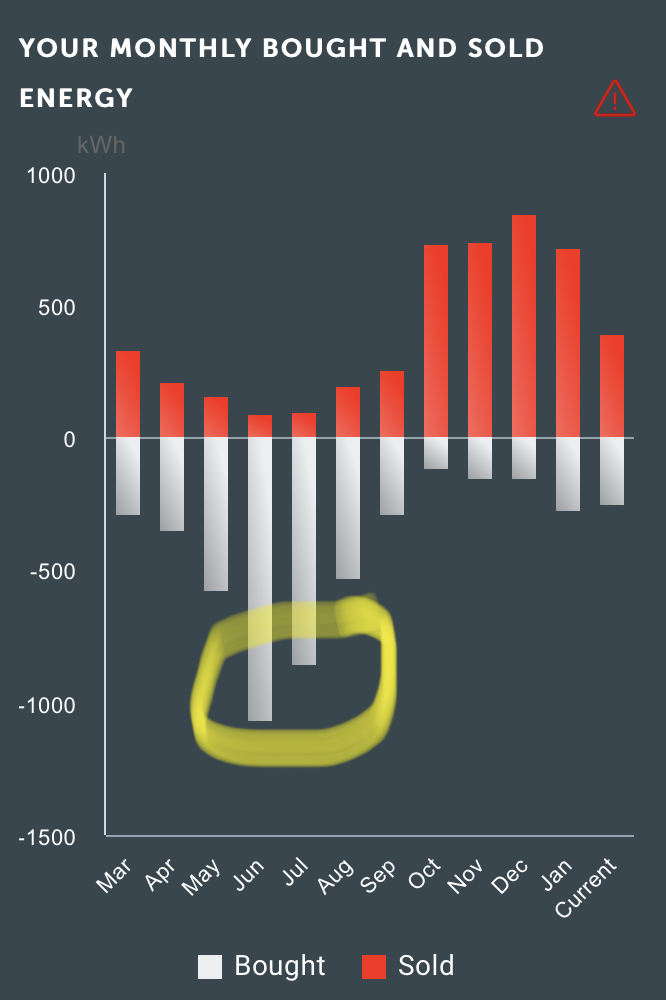
Having tracked our energy use since installing the battery, it seemed fairly obvious that upgrading our battery could reduce our carbon emissions further. Following some more rigorous calculations it appeared that we could store more without increasing our ongoing electricity spending, except for a one-off fee. More on this in a future blog.
Have you had a similar experience installing a house battery? Has it changed the way you use electricity?
Disclaimer: This blog has been written from the perspective of a customer of Plico Energy. It is not an endorsement of the service and I have not been compensated in any way to generate this content.

 Chasing Zero
Leave a comment