
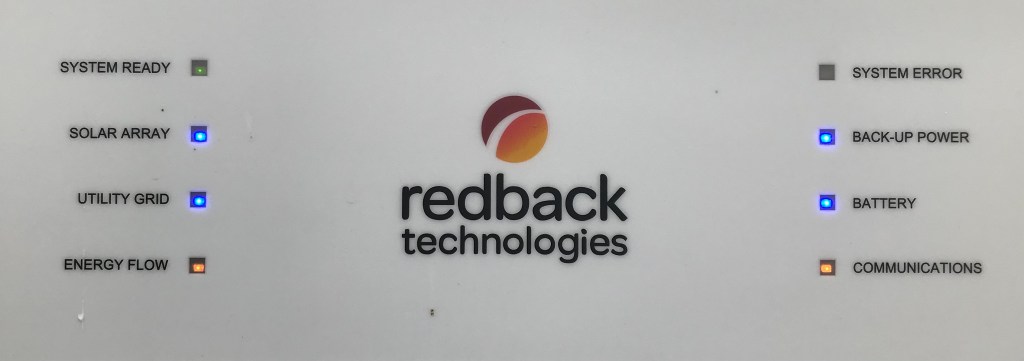
The idea of having a house battery has appealed to me since they came on the market. It made sense to me that in Perth, where we have plenty of sunshine, that saving some solar energy for after dark would help reduce our carbon footprint.
But price was a barrier.
When we moved to our current home in 2019 it already had a 5KW rooftop solar system. I phoned a couple of solar companies and the upfront cost to install a battery was $12,000 to $14,000.
One of the companies I phoned even told me they would not recommend getting a house battery because it wouldn’t pay for itself within ten years.
A couple of years later I heard about Plico Energy, who had introduced a new ‘subscription’ model for domestic rooftop solar and battery systems. For a set weekly fee the system could be installed and managed under a ten-year agreement.
I was a bit nervous about a ten-year contract but I contacted Plico and they talked me through how their service worked.
Assessing house battery potential
A reasonably quick remote assessment, with satellite mapping technology, suggested there was potential. A week or so later, a site visit to check our house, roof space and potential locations for a battery, were also positive.
We had plenty of roof space to add more panels, there were a couple of spots where the battery could be placed and the estimates for solar power generation and storage were positive.
The only slight issue was that one of our neighbour’s trees would create shade on the west side of the house, reducing the solar power generation by an estimated six per cent.
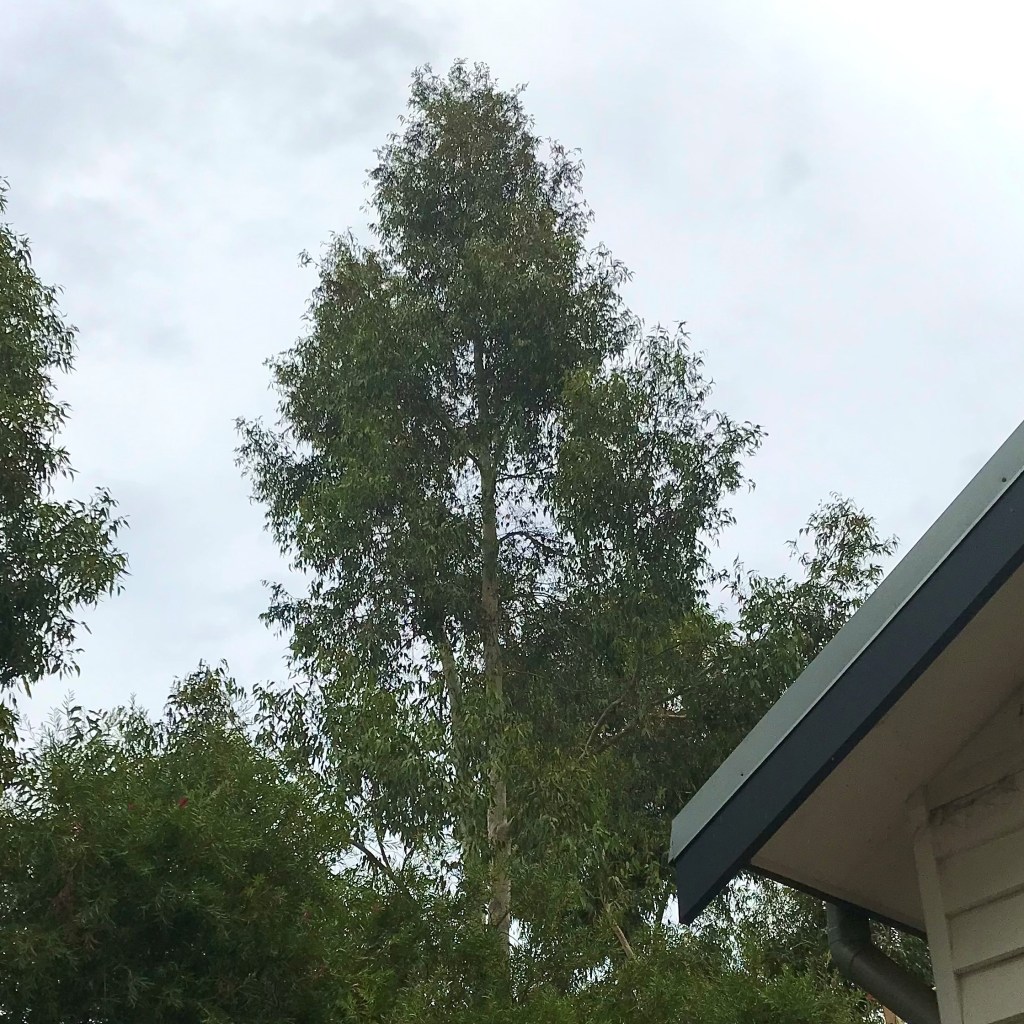
That tree was playing its part in removing carbon dioxide from the atmosphere so it didn’t make sense to ask the neighbour to chop the top off it for six per cent extra solar generation.
Unfortunately, there was no option to hook up our existing panels to the battery.
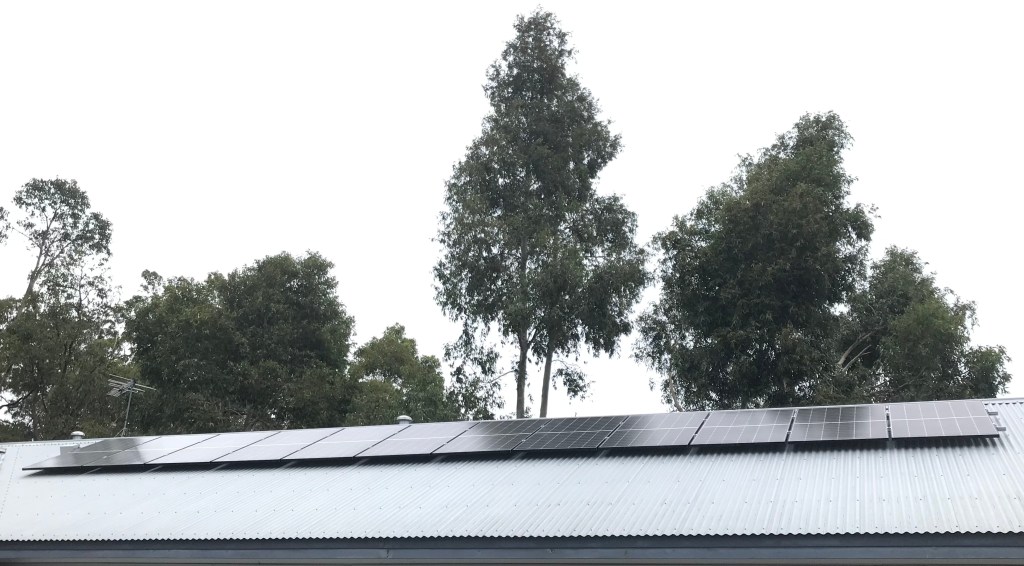
Plico recommended installing two banks of solar panels – one on the east facing roof, to capture the morning sun and the other on the west side of the house, to catch afternoon rays. Our existing solar system faced north so there was not much space left on that part of the roof.
The new solar panels would charge the battery, but the existing system would still provide its share of clean electricity – for our home, but also exporting any excess to the grid.
Weighing up the savings
We sat on the proposal for a few months.
It wasn’t as simple as buying a battery outright and using the stored electricity as and when we needed it.
Under Plico’s model, they manage the battery and are responsible for the ongoing maintenance and performance of the system. Also, their collective systems installed across WA are combined as part of a virtual power plant (VPP). The VPP allows Plico to take control of the hundreds of house batteries in their network collectively to support the WA grid at times of peak demand or minimum demand. It’s a positive solution for helping transition to a cleaner grid (and members receive a nominal fee when the VPP is activated), but we would have less control of the battery at certain times.
As a new service offering and something of an unknown quantity we pondered the pros and cons:
Pros of the solar and battery solution
- An increased proportion of our electricity would come from renewable solar.
- It was an affordable solution with minimal up-front costs, and
- Was estimated to save us around $450 per (bi-monthly) billing cycle on what we had been paying Synergy for grid energy.
Cons of the solar and battery solution
- It was an unproven technology and model (over the long term).
- We were unable to add our existing solar panels into the system.
- We wouldn’t have full control of the battery.
In the end, the decision came down to whether we expected the proposed system to deliver the benefits we wanted – cleaner electricity at an affordable price.
To support this, a 20-year projection on costs and savings showed estimated that the system would likely pay itself back well before the ten-year contract finished. Efficiency degradation across the 20-year lifespan of the solar PV panels and battery were taken into account, and after ten years we could decide whether to keep and maintain the system ourselves or sign up to another maintenance agreement.
At that time, it seemed that this was probably the only model on the market that would give us the new technology for a manageable fee of just under $40 per week.
We had a pool installed a few months before we committed to the solar battery system and the power-hungry pool pump made the case even more compelling. The two electricity bills we’d had after putting the pool in were the highest we’d ever had in this house!
So we took the plunge.
In May 2022, we had 8.88KW of new solar panels and a 10.65KWh battery installed.
Has it been a success?
Yes.
In 2023 we imported 25% less electricity from the grid than we did in 2020. That includes the extra power being used by the pool pump, and overuse of heaters in winter when we forgot to set their timers.
During the past two to three years, there have also been increases in renewable energy feeding into the wider grid in Western Australia. Combining that with our solar and battery system, has decreased our household greenhouse gas emissions from electricity by 45%.
Perhaps even more impressive is that in 2023 we exported 4,585 units of electricity to the grid – not far off the 5,003 units we bought from the grid. But that’s another story.
Do you have a house battery installed at home? How has your battery performed against expectations?
Disclaimer: This blog has been written from the perspective of a customer of Plico Energy. It is not an endorsement of the service and I have not been compensated in any way to generate this content.

 Chasing Zero
Leave a comment